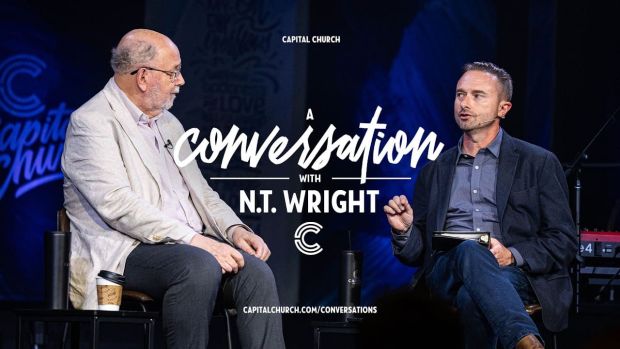
NT Wright on Good Friday Revolution, Suffering & Faith, and Politics & Faith
The framing most Christians grew up with is tidy and transactional: Jesus died to pay a debt, the ledger was balanced, and the story ends there. NT Wright has spent a career dismantling that reading, and in this conversation at Capital Church in Salt Lake City, he gets to the heart of why it matters. The cross, Wright argues, was not a settlement. It was a decisive victory in a war most people didn’t realize was being fought. From the moment Jesus walked into a synagogue and announced the kingdom of God, dark forces began organizing against him. The Pharisees, the Herodians, the crowds at the foot of the cross, and even Judas—Wright reads all of them as unwitting participants in a cosmic collision that had been building since creation. The temptation in the wilderness and the mockery at Golgotha carry the exact same taunt: if you are the Son of God. That repetition is not accidental. It’s the same enemy, the same strategy, arriving at the same throne.
What makes the cross a revolution rather than a tragedy, Wright explains, is that evil was not just defeated. It was exhausted. God’s anointed absorbed the full force of darkness, and the resurrection is the proof that nothing was left in reserve. Nobody standing at the cross on Good Friday understood that. The disciples walking to Emmaus were crushed. But looking back through the empty tomb, the early church grasped something stunning: if death had been beaten, then evil itself had spent everything it had. The revolution was launched. Not completed, launched. Wright is careful on this point because the world still groans, and the church is called to be the people who live inside that unfinished story, pressing its logic into every corner of ordinary life.
That same logic shapes everything Wright says about suffering. When an audience member’s pain is personal and not theoretical, he refuses the quick fix and offers something far more honest: the Bible does not explain suffering; it pictures God entering it. He directs hurting people to walk the Emmaus road, to tell Jesus exactly what went wrong, and to wait. He points them to the Psalms, which he describes as the prayer book Jesus himself used, capable of holding grief so raw that the only way to pray certain verses is by holding someone else’s devastation before God when your own words have run out. And on the perpetually live question of the church and political life, Wright is equally unsparing. The kingdom of God was never a private spiritual category in the first century. It was a direct confrontation with Caesar. The real question is not how to stay out of politics, but whether the church has actually asked what it would look like for the God revealed in Jesus, the one who wept at tombs and rejoiced with the joyful, to be king. Until that question is lived and not just discussed, calling any nation a Christian one is mostly nostalgia.



Latest Conversations
NT Wright on Women, Politics, and the Future of the Church
NT Wright on the Resurrection, Common Mistakes, and Spiritual Practices