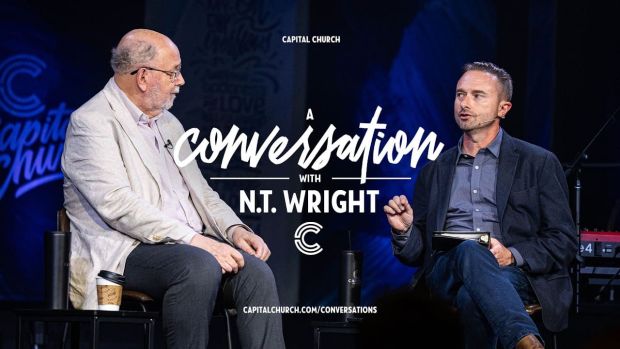
NT Wright on Women, Politics, and the Future of the Church
NT Wright challenges the traditional restriction on women in ministry by pointing to two pivotal figures in the New Testament who shattered ancient gender norms. He highlights Phoebe, the independent businesswoman entrusted with delivering, reading, and expounding Paul’s letter to the Romans. Then, Wright turns to Mary Magdalene, the first witness commissioned to announce the resurrection and the ascension of Jesus as Lord. Wright argues that these women were not merely passive observers but active leaders whose actions established a precedent for female authority in the early church. When addressing the contentious passage in 1 Timothy prohibiting women from teaching or having authority, Wright does what all good exegetes do; he steps into the specific cultural context of Ephesus, where a female-dominated cult of Artemis might have encouraged women to make aggressive power grabs rather than steward genuine spiritual leadership. He suggests that Paul’s instruction for women to keep silent refers to the scholarly leisure required to study scripture properly, mirroring Mary sitting at Jesus’ feet as a disciple learning to teach, rather than a permanent ban on women’s leadership or the silencing of their voices.
The conversation shifts to the intersection of faith and politics, where Wright distinguishes between the coercive power of worldly rulers and the servant leadership of the Kingdom of God. He explains that Jesus redefined power by rejecting the bullying tactics of figures like Herod and Rome, instead modeling authority through service and sacrifice on the cross. Wright points to the Beatitudes and the rest of the Sermon on the Mount as blueprints for a community that prioritizes the poor and marginalized while warning power brokers that God’s justice is coming. He clarifies that Jesus’ statement about his kingdom not being of this world does not mean it is irrelevant to earthly affairs, but rather that it operates by a completely different modus operandi. The Kingdom of God does not seize power through violence or political maneuvering but transforms the world through healing, justice, and the restoration of life for the outcast.
Finally, Wright addresses the current state of the global church, expressing encouragement for the diverse worship styles that unite people from various backgrounds, yet voicing deep concern over the lack of genuine unity. He argues that the modern church often fails to care about other Christian traditions, ignoring Paul’s urgent call in Romans for believers to worship with one heart and voice despite their differences. Wright urges Christians to move beyond indifference and actively seek fellowship with believers from other traditions, recognizing that their collective witness is essential in a secular culture. He believes that the church’s greatest strength lies not in uniformity but in its ability to demonstrate unity across divides, thereby reflecting the reconciling power of the Gospel to a fractured world.



Latest Conversations
NT Wright on Women, Politics, and the Future of the Church
NT Wright on the Resurrection, Common Mistakes, and Spiritual Practices